
Some interfaces are efficient. Cover Flow was a joy — a reason to open the app even when you did not know what you wanted to hear. Flicking through a 3D carousel of your own album covers, each one catching the light and tilting away, made browsing feel like thumbing through a record crate.
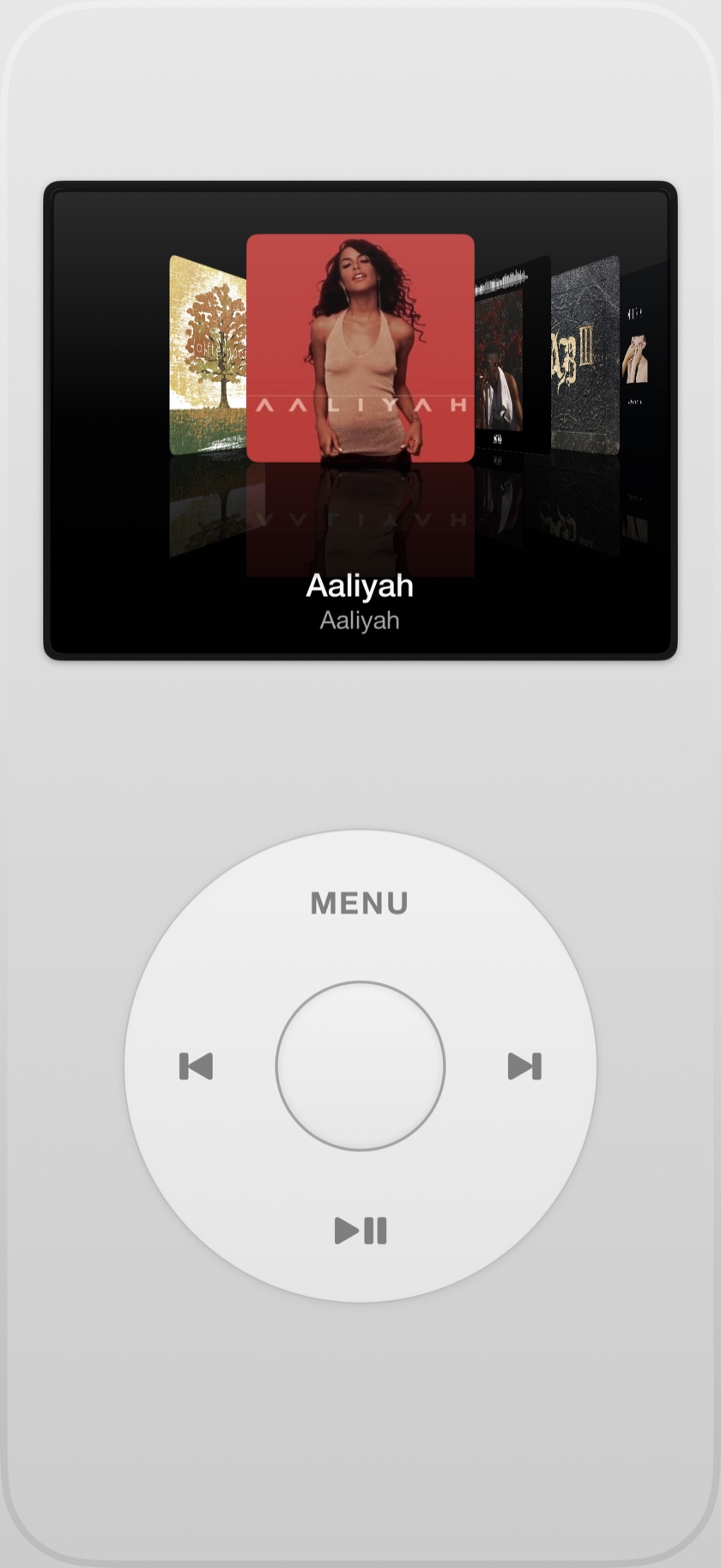
Where Cover Flow went
Cover Flow began as a small third-party idea, was absorbed into iTunes in 2006, and reached the iPod and iPhone the following year. Then, around 2013, Apple swept it out of the iOS Music app as the whole system moved to flat white lists. It was efficient. It was also a little colder. For a decade, Cover Flow survived mostly as a thing people missed out loud.
How RetroDeck rebuilds it
RetroDeck recreates Cover Flow as a genuine 3D carousel — perspective, tilt, and glossy reflections rendered live — pulling the real artwork from the music you own. Crucially, it is wheel-driven: you spin the click wheel and the covers flick past with momentum that feels physical, not like swiping a flat list. Land on an album, press the center, and it flips into the track list so you can play.
Using it
- Open Music → Cover Flow.
- Spin the wheel to glide through your collection; the faster you go, the more it carries.
- Stop on a cover and press the center button to open its tracks and play.
- Press Menu to step back out to the list whenever you want.
It is the one feature people tend to show other people. There is something about your own covers, the ones tied to actual memories, sliding past in three dimensions that a grid of thumbnails never quite matches.
Flick through your covers again.
Cover Flow is part of RetroDeck — along with the click wheel, the EQ, and your whole library. $2.99 once.
Frequently asked questions
Can I get Cover Flow on my iPhone?
Yes. Apple removed Cover Flow from its Music app years ago, but RetroDeck recreates it: a 3D carousel of your album covers with glossy reflections, driven by the click wheel, that opens the track list when you land on a cover.
What happened to Cover Flow?
Cover Flow appeared in iTunes and on the iPod and iPhone from 2006–2007, then Apple retired it from the iOS Music app around 2013 as the interface moved to flat lists.